February 2024
How to design a house that withstands the heat in Merida
Air conditioning works, but it is a consumption-based solution. Design decisions can reduce that dependence from the beginning.
It is hot in Merida. That is not a complaint or a novelty: it is the starting point for any architecture project in this city.
The problem is not heat itself, but building without considering it. For decades, the answer was air conditioning. And it works, of course, but it is a consumption-based solution: it requires constant electricity and does not solve the underlying issue, which is a building that absorbs heat instead of managing it.
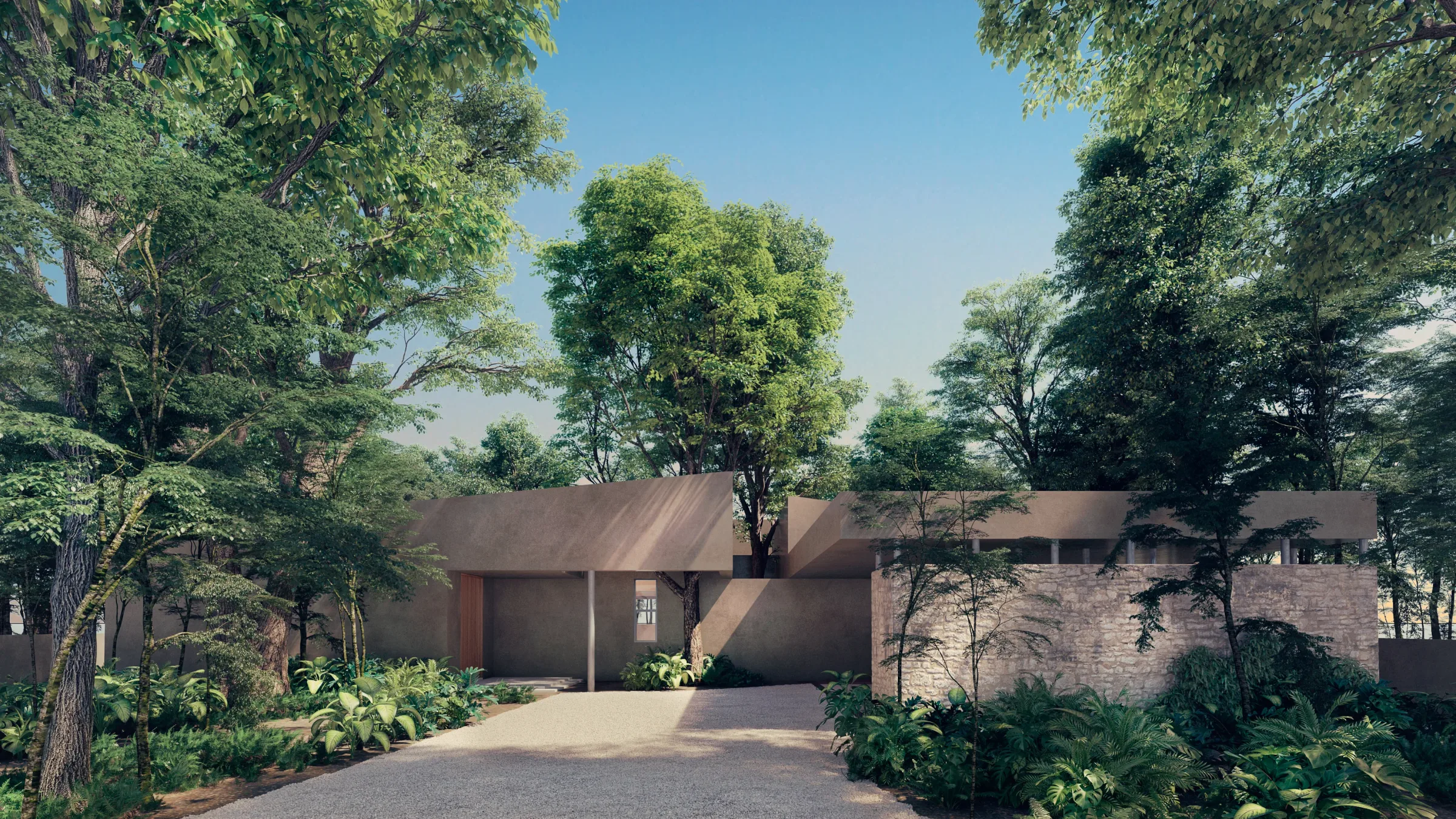
A building well designed for Merida's climate can significantly reduce that dependence. It is not experimental architecture. It is what the colonial houses downtown used to do, and what stops being done when construction ignores the site.
The basic principle of ventilation is simple: if air can enter from one side and leave from the other, the house ventilates itself. The prevailing winds in Merida come from the southeast. A well-oriented house has its main openings in that direction. What complicates this in practice is internal compartmentalization: an open plan ventilates well; one full of closed rooms does not let air pass even if it has windows everywhere.
Thermal mass also matters. The thick stone walls of colonial houses were not a constructive whim: they absorbed heat during the day and released it at night, when the temperature drops. Modern concrete block is cheaper and faster to build, but its thermal behavior is different.
Solar protection deserves attention of its own. A west-facing wall without an overhang receives afternoon sun for hours. With a well-calculated overhang, that same wall can remain shaded all year. The difference in interior temperature can be several degrees, without additional energy consumption.
And trees. A deciduous tree on the west side gives shade in summer and lets light through in winter. No construction material does that.
In FMT Estudio projects, orientation and ventilation are worked from the first sketch, not as an adjustment at the end. It is not always possible to orient a lot perfectly, especially in lots between party walls, but even in those cases certain decisions make a difference: the height of spaces, the position and dimension of openings, and the relationship between inside and outside.
Building for the heat in Merida does not require expensive technology. It requires attention to the site from the beginning.